
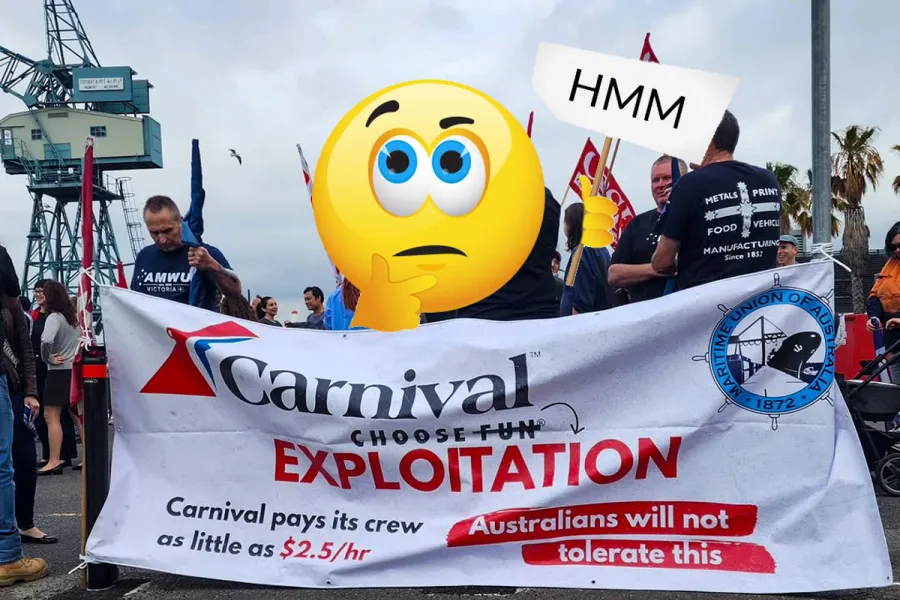
Carnival’s cruise operation in Australia found itself in the spotlight last week after the Maritime Union of Australia (MUA) rolled out a headline-grabbing claim:
Workers earning as little as $2.50 an hour, stuck with “precarious contracts,” “cramped living conditions,” and “poor quality food and water,” plus a long list of other onboard horrors.
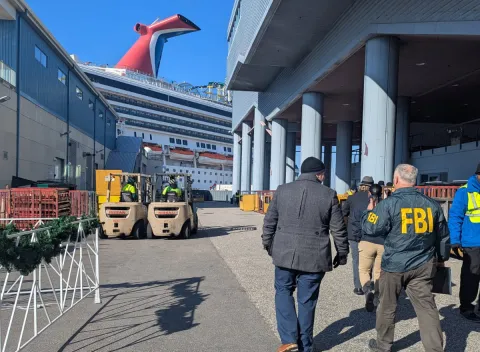
The union promised a show of force outside Station Pier in Melbourne, the kind of rally you’d expect to come with a loud crowd and big energy. Instead, the protest drew fewer than 100 people, even after being joined by several other unions.
Ouch. When your big moment turns into a small gathering, it’s hard not to wonder: was this about crew welfare… or just a membership drive with ocean views?
And social media? Let’s just say the comment sections didn’t exactly sing sea shanties in support of the union.
The “Boat” Moment: Straight Red Card
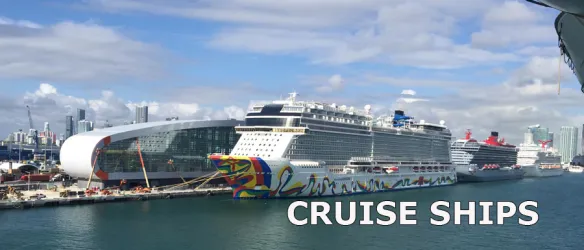
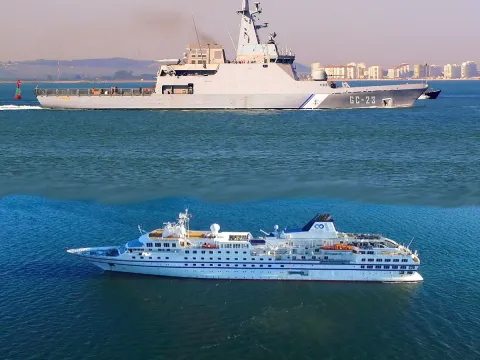
Now, everyone makes mistakes. People call ships boats all the time. Honest slip. But when a Maritime Union member refers to a 113,300-gross-ton vessel as a boat, that’s not just a slip that’s a “please hand in your whistle at the door” moment. If you’re going to protest the maritime industry, at least get the maritime part right.
Big Claims, Selective Math
Here’s the problem: even people who genuinely believe crew deserve better pay looked at the union’s messaging and thought… this feels a bit cherry-picked.
Yes, the cruise industry has real issues. Anyone who’s worked at sea knows that. Long hours, pressure, fatigue, and “targets” that never seem to end — it’s part of the reality.
But comparing cruise ship employment to Australian shoreside pay like it’s the same job under the same system is where things start getting wobbly. Most cruise crew are hired under international maritime employment frameworks, not Australian awards — and many crew come from countries where the alternative is earning the equivalent of a few dollars per day, not per hour. That doesn’t mean everything is perfect onboard. It does mean the union’s framing can look less like “context” and more like “campaign copy.”
One crew member summed up what many onboard were saying privately:
Crew have issues everywhere, but these claims feel unrealistic. They’re comparing Australian standards to international maritime contracts. Most of the people protesting have never worked on cruise ship, and they don’t understand what this job means for someone supporting a family back home.
Another long-term Carnival crew member said their pay had been adjusted multiple times and that their salary has grown significantly through promotions and merit-based increases — basically the opposite of the “pure exploitation with no upward mobility” storyline.
So Why Carnival, and Why Now?
This is the part that made even more people suspicious: Carnival Corporation has operated in Australia by P&O Australia for decades without this level of public union drama. But after Carnival absorbed and transitioned the former P&O Australia operation, suddenly we’ve got protests, headlines, and a fresh wave of outrage.
Some crew believe the real spark might not be “Carnival underpaying everyone,” but post-transition fallout, especially third-party and some roles that were reshuffled, replaced, or “washed out” as the operation moved toward a fully Carnival-managed model. If that’s the real story, fine, but then tell that story clearly, instead of trying to sell the public a simple “$2.50 an hour” headline like it’s the entire truth.
The union might have expected the public to rally behind the cause. Instead, the loudest reaction online wasn’t “go MUA.” It was:
“Talk to crew before talking crap.”
“Compare it to wages in their home country.”
“They get food, accommodation, and many send money home.”
“Are you targeting Carnival only, or all cruise lines?”
And the classic: “It’s a ship, not a boat!”
Not everyone was pro-Carnival. Some commenters pointed out that crew work brutal hours, that tipping culture exists partly because base pay can be low, and that cruise companies are extremely profitable. Fair points. But the overwhelming tone online was: the union’s pitch felt off — overly simplified, overly dramatic, and suspiciously timed.
Carnival Fires Back — and It’s Not Subtle
Carnival, for its part, didn’t just deny the claims. They went straight for the motive, calling the campaign an “organising drive” to recruit members and raise revenue — and described the protest tactics as “lame” and “antics.” They also pointed to MLC compliance, onboard benefits, and Australian Maritime Safety Authority inspections.
Translation: This isn’t about crew. It’s about the union wanting a bigger slice of the pie.
The Real Question
If the goal is to improve crew welfare, then crew voices should be front and center — not a headline designed for maximum outrage and minimum nuance.
Because if you genuinely want to help cruise crew, you don’t start by treating them like a prop in a recruitment campaign.
You start by listening to them.
And preferably, you learn the difference between a ship and a boat first.