
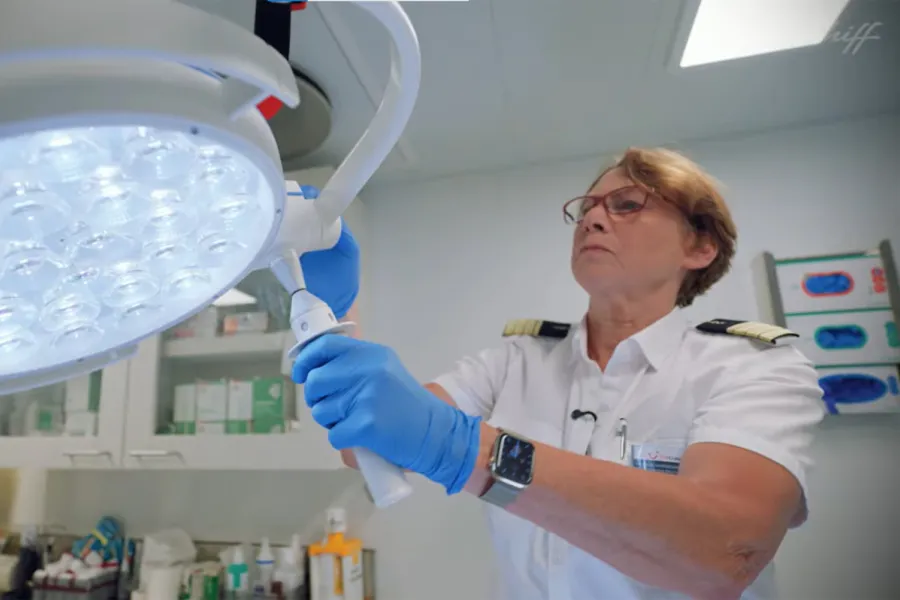
Working as a doctor at sea is often described in clinical terms—equipment, emergencies, protocols. But behind the medical charts and emergency drills, there’s a deeply human side to the role, one that blends responsibility with emotion, pressure with perspective, and medicine with moments that stay with you long after the contract ends.
Onboard ships like Mein Schiff Relax, being a doctor is not just a job—it’s a way of life.
A Dream That Becomes a Lifestyle
For one physician working at sea, the journey started long before stepping onboard. Growing up around the ocean, sailing and water sports were always part of life. Medicine came later—but the pull of the sea never disappeared.
So when the opportunity came, it didn’t feel like a career move. It felt like coming home.
“When I first stepped on the ship, I thought—this is now your home for the next few months.”
That moment—standing on deck, realizing both your workplace and your life will unfold here—is something many crew never forget.
One Doctor, Every Situation
At sea, there are no departments down the hallway. No quick referrals. No backup teams waiting on call.
Everything that comes through the medical center door—whether it’s a minor issue or a life-threatening emergency—is yours to handle.
From cardiac cases and injuries to everyday medical concerns, the responsibility is broad and constant. And while the onboard hospital is modern and well-equipped—comparable to a small emergency department—it still exists in isolation.
“The onboard hospital is like a lifeboat—it’s good to have it, but better if you don’t need it.”
That simple comparison captures the reality: you’re prepared for anything, but always hoping the serious cases never come.
The Weight of Distance
One of the biggest differences from land-based medicine isn’t the equipment—it’s the distance.
When something serious happens, you can’t just transfer a patient to a specialist. You stabilize, you monitor, and sometimes you wait—hours, even longer—for evacuation depending on weather and location.
Those decisions carry weight.
At sea, clinical judgment isn’t just important—it’s everything.
Time to Care, Time to Listen
And yet, in contrast to the pressure, there’s something many doctors say they gain onboard: time.
Time to talk to patients. Time to explain. Time to reassure.
In a world where hospital visits can feel rushed, the onboard environment allows for more human connection. You don’t just treat a condition—you meet the person behind it.
Sometimes you see them again later on deck. Sometimes they stop to say thank you. Sometimes it’s just a smile across the ship.
Those moments matter.
Medicine in a Floating Community
Cruise ships are small cities at sea, filled with people from all over the world.
Doctors treat:
- Guests on vacation, often far from home
- Crew members working long contracts
- Patients from different cultures, languages, and expectations
It’s medicine that goes beyond clinical knowledge—it requires empathy, adaptability, and understanding.
And within the crew itself, there’s a unique bond. Living and working together for months creates connections that are hard to replicate on land.
Always Ready, Even When It’s Quiet
Even during calm days, the responsibility never switches off.
Behind the scenes, medical teams constantly train for emergencies—running drills, preparing for worst-case scenarios, staying ready for situations that may never happen.
Because if they do, there’s no room for hesitation.
The Ocean Changes Everything
And then there’s the sea itself.
Between shifts, there are moments—standing on deck, looking at the horizon, feeling the air, hearing the waves—that reset everything.
The ocean has a way of slowing things down, of putting things into perspective.
It’s not just a workplace. It becomes part of how you think, how you feel, how you recover after a long day.
More Than a Job
Being a cruise ship doctor means carrying responsibility 24/7. It means making decisions without immediate backup. It means being ready for anything.
But it also means something else.
It means helping people continue their journey when things don’t go as planned.
It means being part of moments—both difficult and meaningful.
It means finding balance between pressure and peace.
And for many who choose this path, there’s one thing they all seem to agree on:
They came for the job.
They stayed for the experience.
Crew Insights
Articles and experiences shared by crew members working on cruise ship. Find out more about ship life at sea together with tips and advices for first time crew members and cruise oldtimers.